Bus Depot

Mannual | Public Building | Architecture

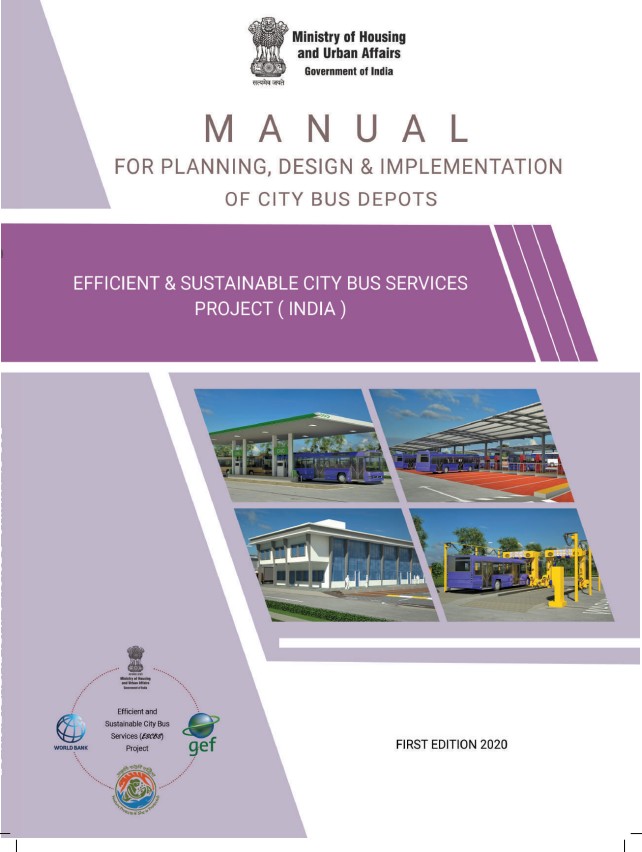
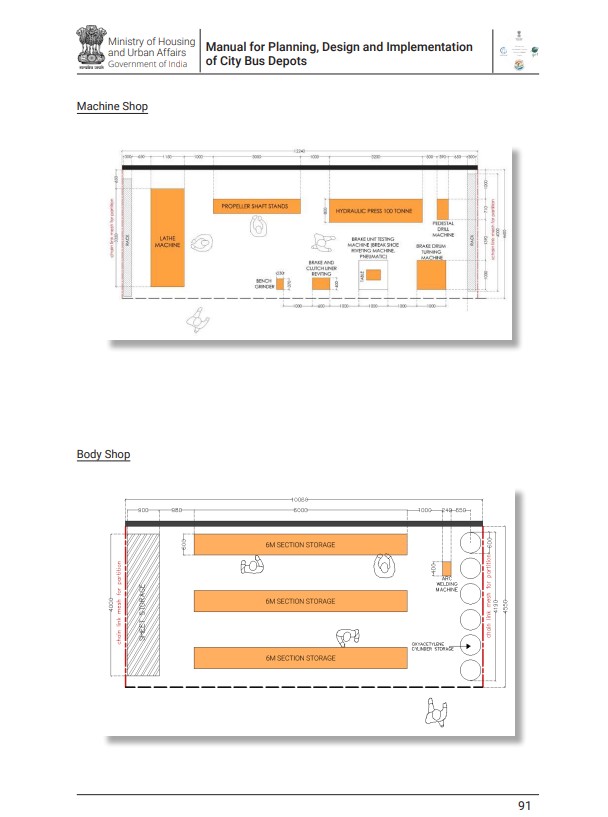
A unique project aims to develop a manual for "Bus depot design". The manual for planning, design, implementation of bus depot for city bus operations.The project initiated with writing a brief with detail requirements, list of equipment, manpower requirement and input from all stakeholders. Forming a design basis agreed and approved from all, next stage of the project was to create layouts for each areas/section as per the codes and standards adopted with in Indian scenario and drawing inspiration from the models of Bagota and Curitiba.

These layouts were then knit together forming layouts of each specific functional zone and then bringing all together on a hypothetical site explaining the complete process and basis of design throughout the manual. The manual of bus depot design becomes a time saver and a reference book for the consultants and the operating teams involved in any bus depot design projects all over the country.

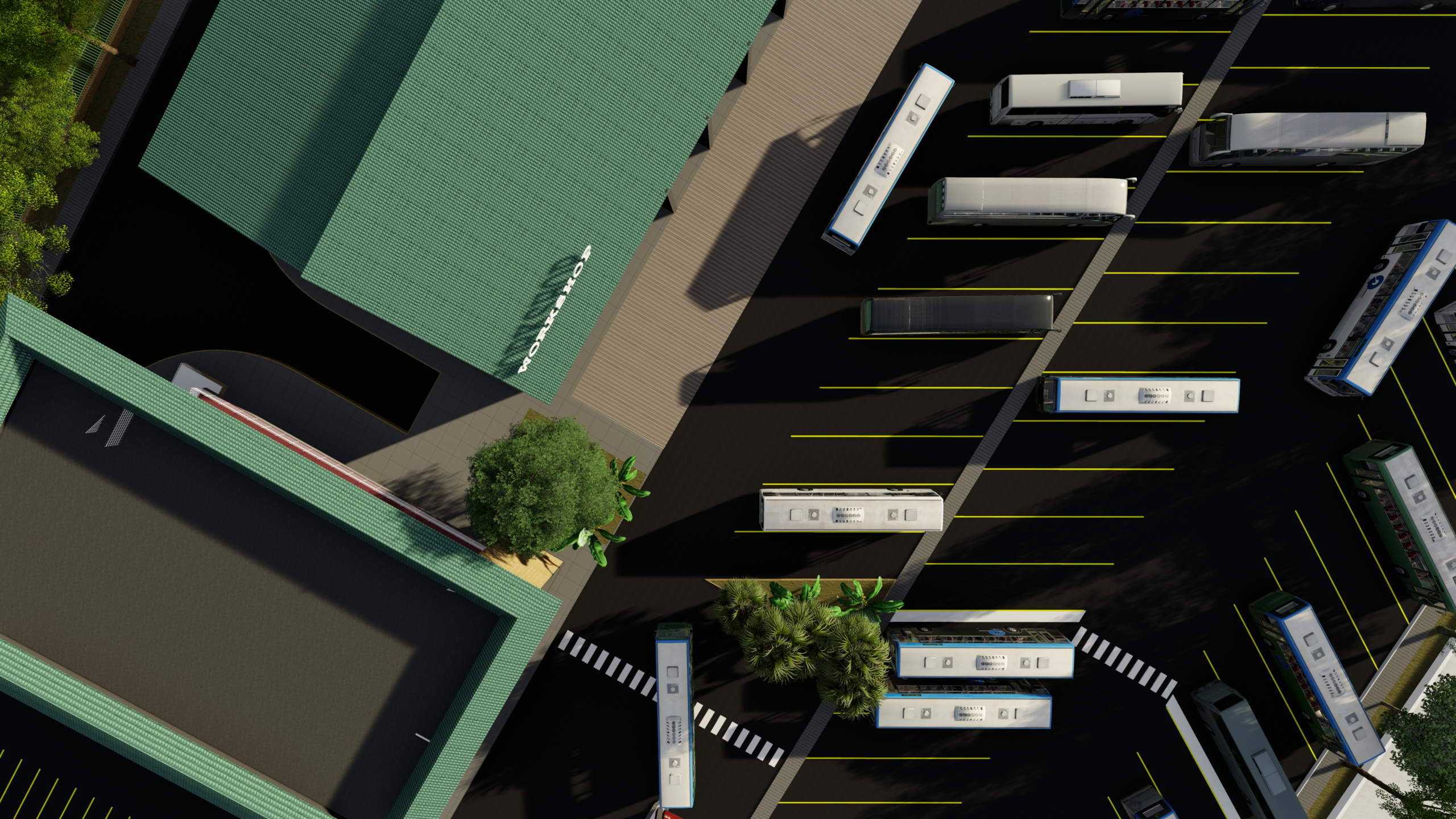
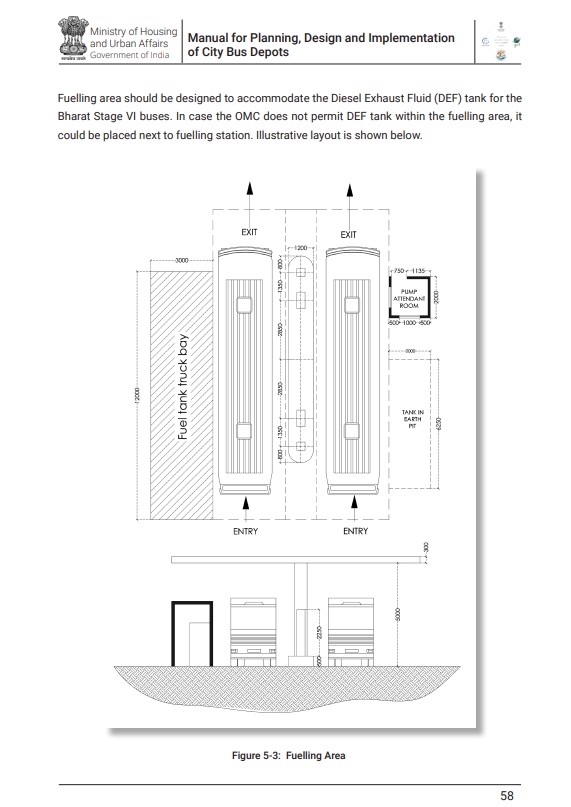
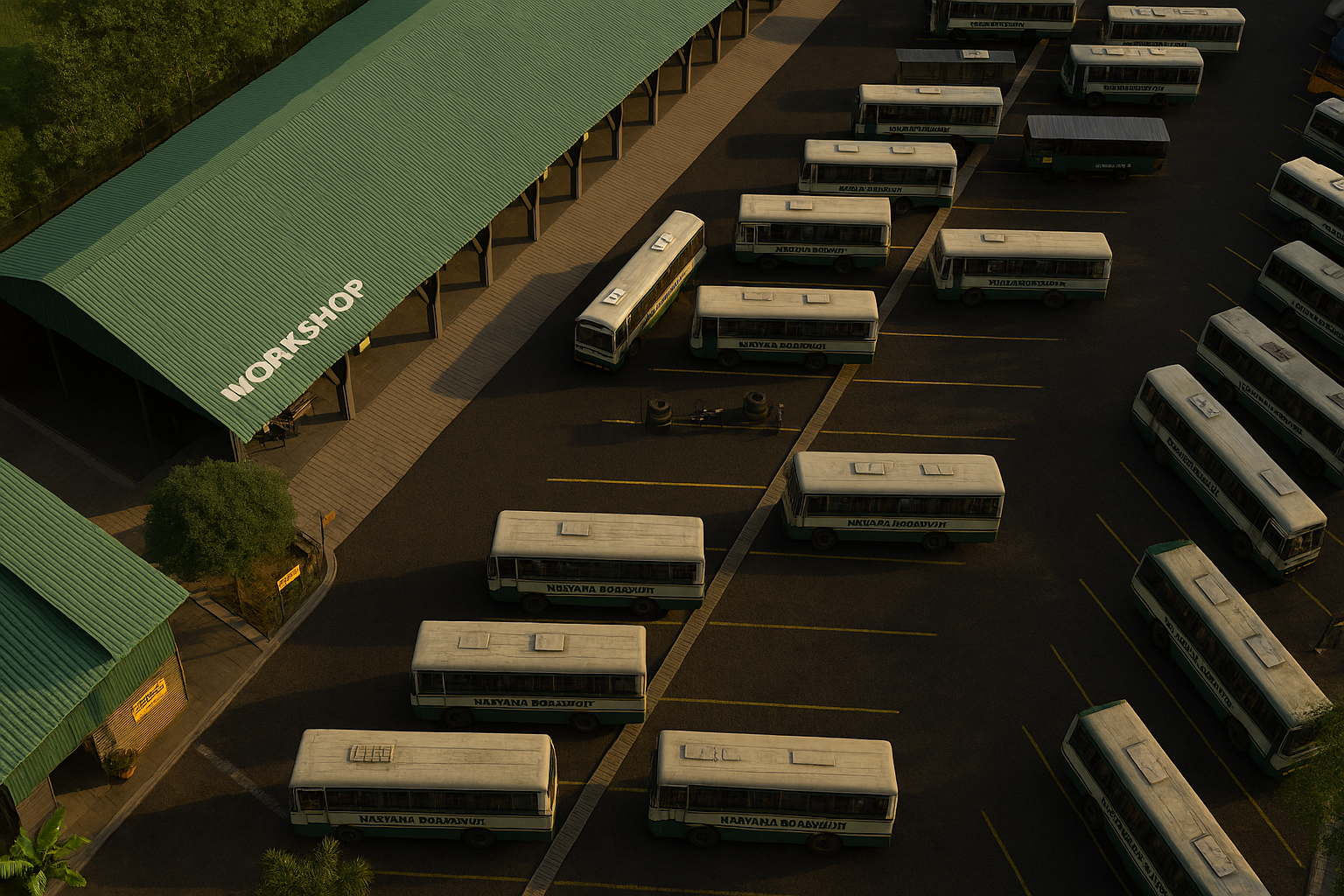
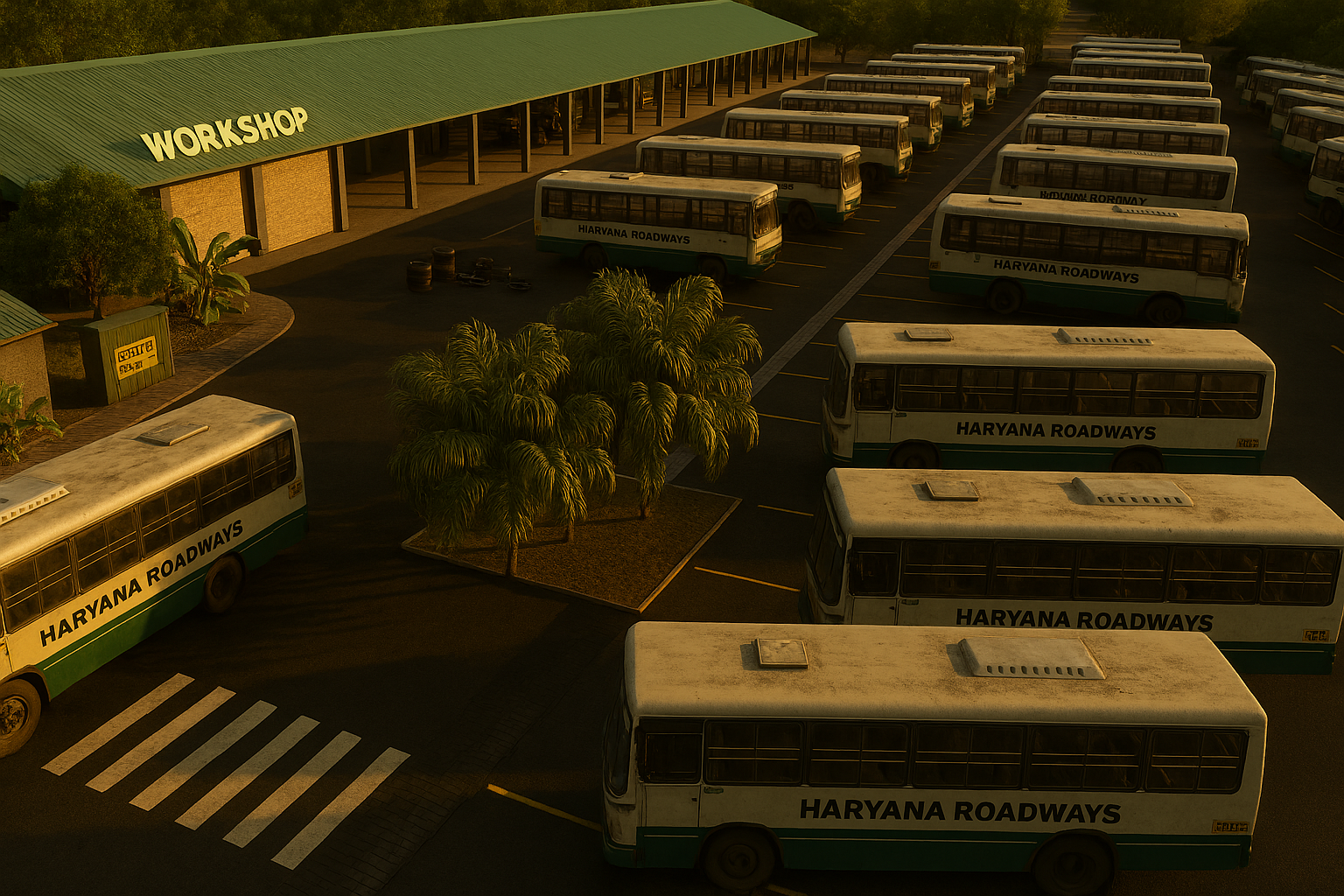
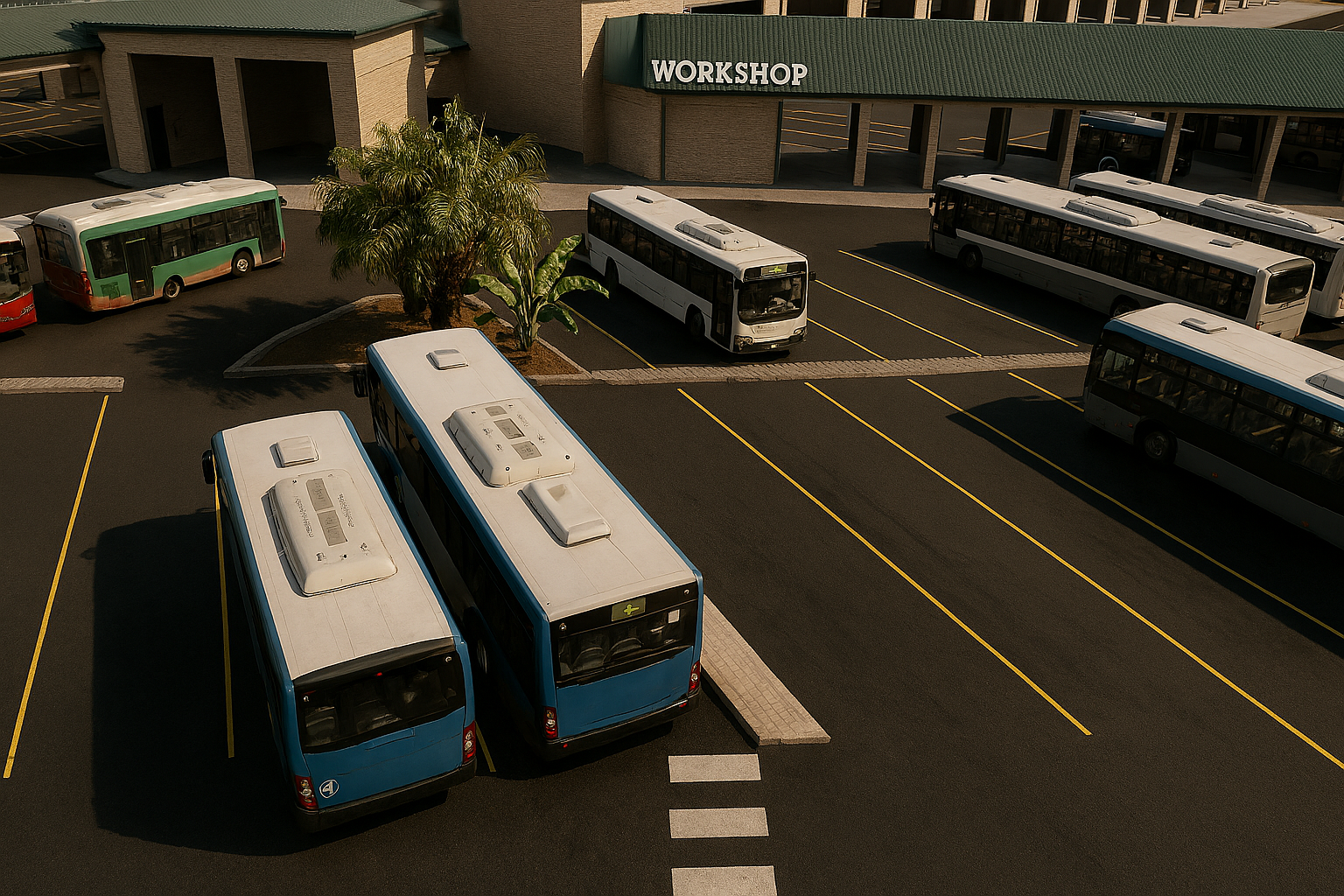
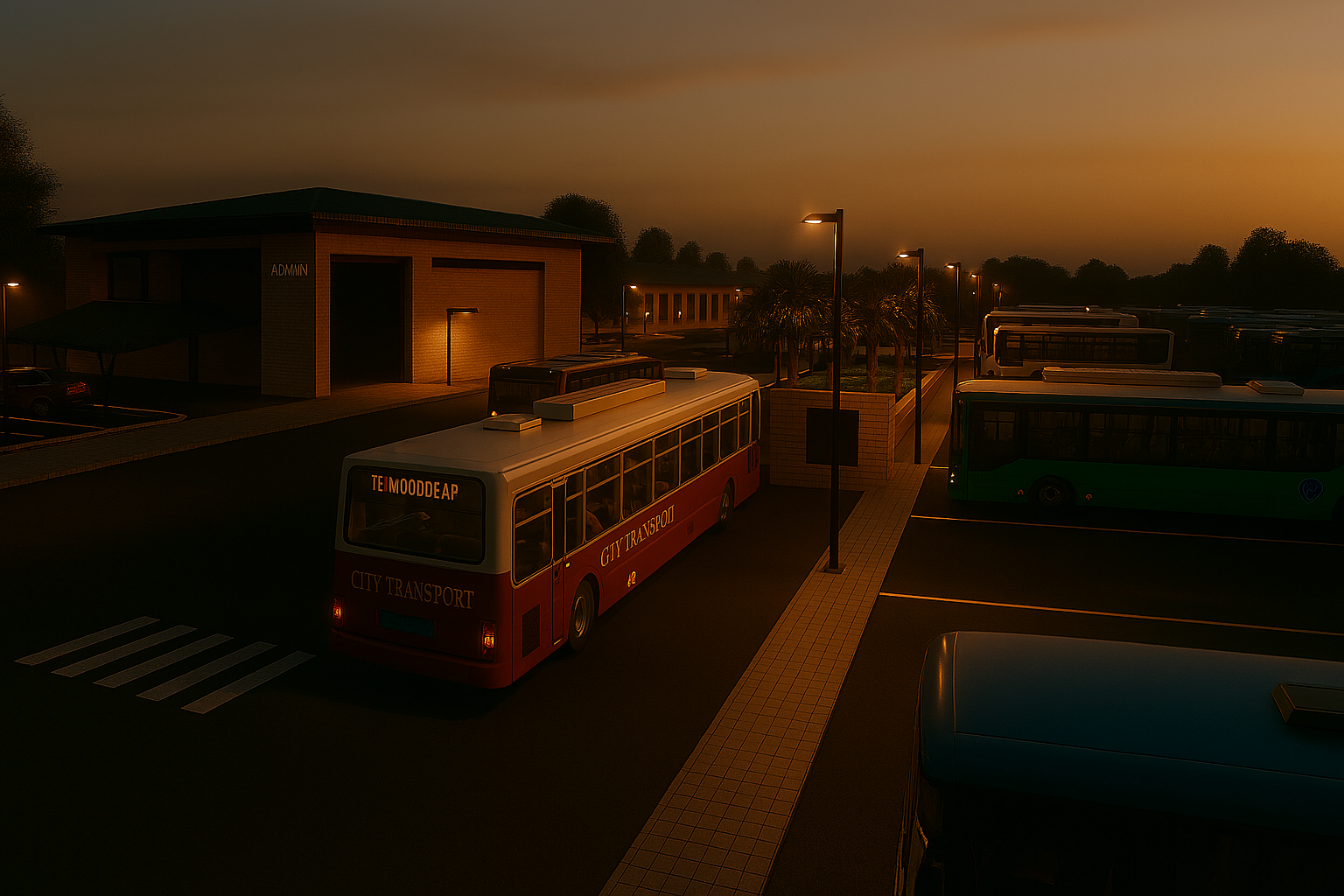
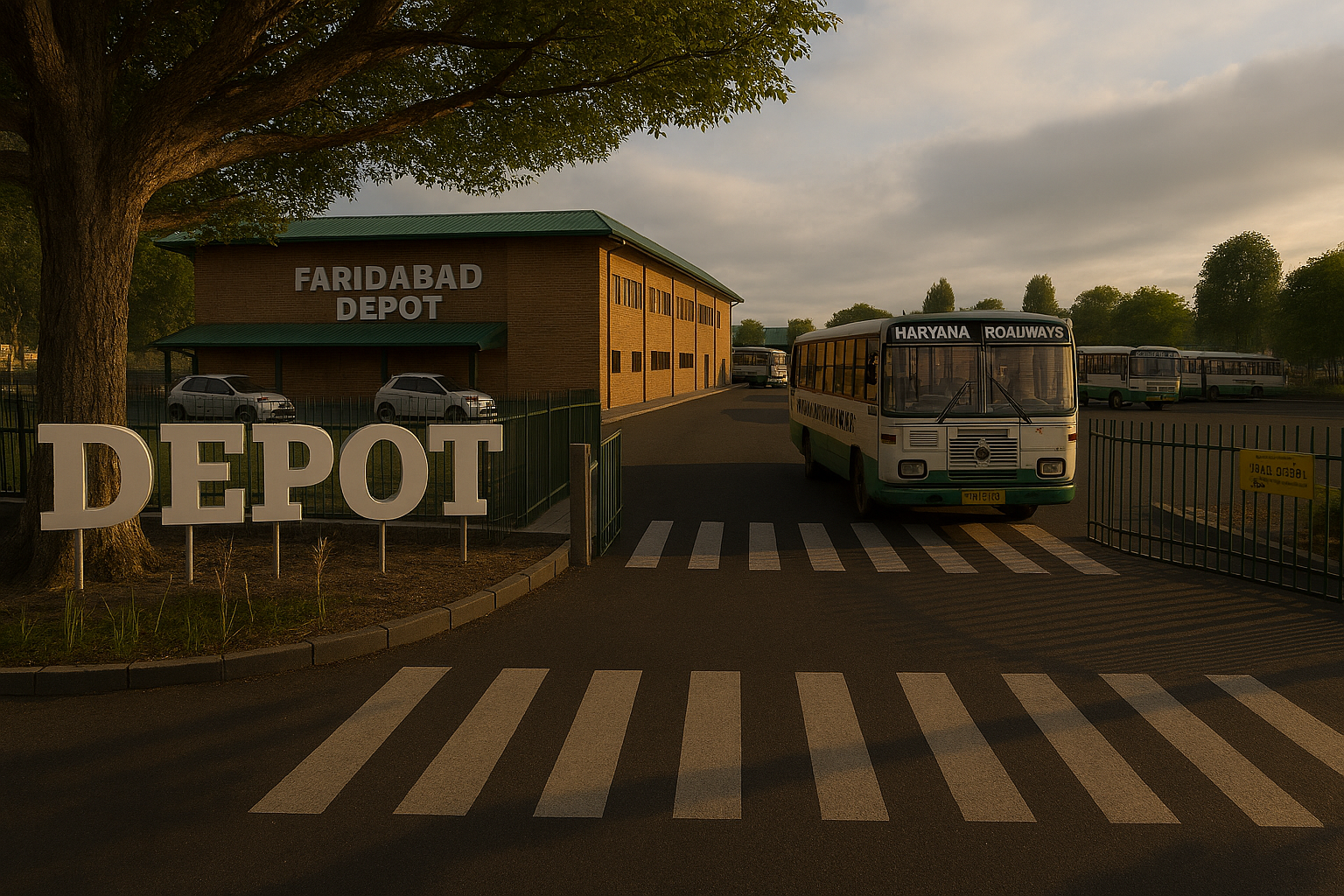
Forming the process/workflow in a space into a zoning plan fulfilling the requirements within the boundaries of codes and compliances. Hypothetical site is taken as per requirement of bus depots. Zoning has been done considering the workflow of bus depot. The location of Admin staff is kept near entrance and separate parking is provided for admin users and staffs. As bus enters there is a fueling bay following the waiting space for the buses during peak time. After that there is a presence of workshop and washing area followed by parking.

The different micro-zones of bus depot emphasise on Admin, workshop, washing area, fueling area, parking. There are two type of users one are catering maintenance and others cater operations. The depot is employee centric. There is no external users or passengers except the ones who need to visit lost and found area.


The admin space is planned keeping the admin current and future operation system specific to bus depot and foot fall in different areas. More footfall areas are kept on ground floor and first floor are left for special utilities with less footfall and accommodations. The workshop are of two types mini workshop and major workshop. Different layouts has been prepared considering both. There are two type of sections as per frequency of usage. One is for periodic maintenance and other is for detailed maintenance that

include engine and other detail works.

The main consideration in planning circulation is to isolate

human circulation with no crisscrossing of human and

vehicular circulation pattern to avoid any chances of

accident or clutter during peak time. Foreseeing the

future scenario, BS6 DPF regeneration areas is planned

separately needing more open space around the bus.

Catering a brader scenario:

Since there will be different bus sizes and site sizes in

different scenarios, an elongated version of the bus

depot layouts has been planned as per site requirement.

Independent bus parking options has been planned as

per varying bus numbers and sizes. There are three type

of bus depot – Diesel fueling , CNG Fueling & Electric

Charging. Three different layouts has been planned

considering the varied requirements according to fuelling

area differences for Diesel, CNG and electrical.

Hypothetical expansion area are provided for easy

planning and future expansion.
More

Scroll to Top